
If you run a small business in Devon or Cornwall, your phone line is still one of the main ways customers reach you. That makes the UK landline switch-off hard to ignore. Traditional phone lines are due to go digital on 31 January 2027, as set out in Ofcom's guidance on the landline switch-off, when the old copper telephone network is retired.
For most firms, the practical replacement is a VoIP phone system for small business: calls that run over your internet connection, with a proper business number, voicemail and call routing. This guide explains what that involves, what to check before you switch, and how a local team can help you get it right.

Table of Contents
Table of Contents
What is a VoIP phone system for small business?
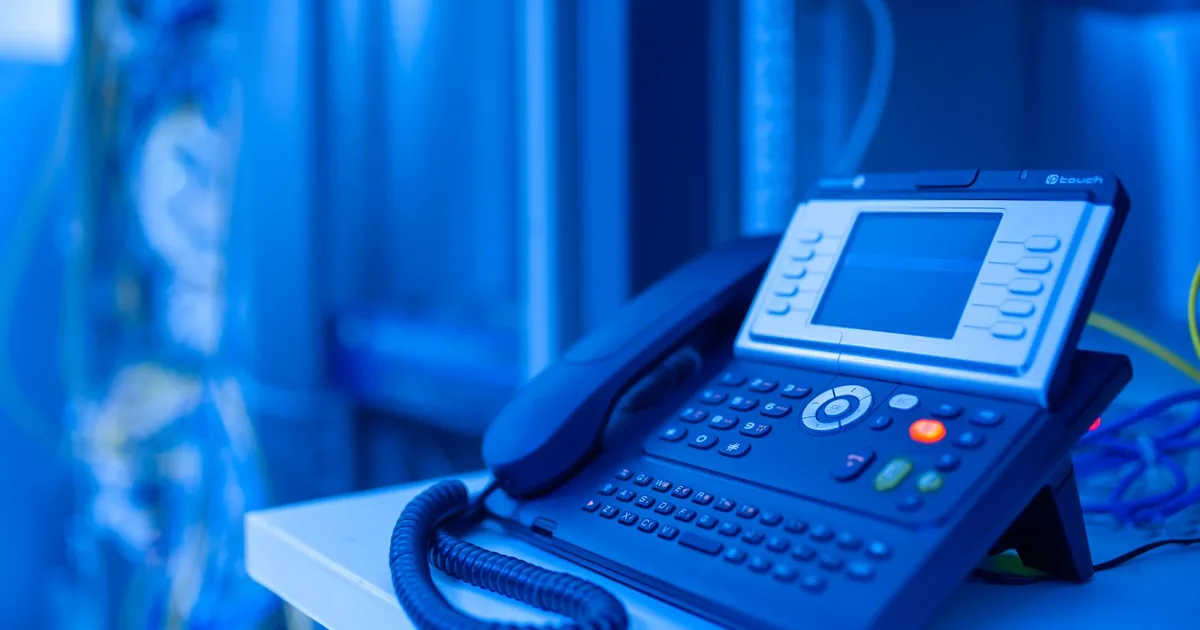
VoIP stands for Voice over Internet Protocol. In plain English, your calls travel over a broadband connection instead of a traditional analogue phone line. You can still use a desk phone that looks and feels familiar. The difference is that the phone talks to the internet, usually through your router, rather than to the old telephone exchange over copper.
Most small businesses now use a hosted, or cloud, phone system. There is no phone system box in a cupboard to buy or replace when it fails. Your team can take calls on a desk phone, a mobile app or a laptop, and in most cases you can keep the number customers already know by moving (or “porting”) it to the new system.
Why the landline switch-off makes this urgent
Openreach and BT have been clear: the Public Switched Telephone Network (PSTN), and the related ISDN lines many offices still use, are being withdrawn. The deadline is 31 January 2027, and you should not assume it will be pushed back again. If you still rely on a traditional landline, you need a digital alternative before that date.
Leave it too late and you risk disruption. You may be moved onto a temporary emergency voice-only service that keeps basic calls going for a limited time, but it may not support the features you use today. For a business the change is rarely a simple case of plugging a phone into the router. You may have several lines, a phone system on the wall, staff who take calls on the move, and other equipment that uses a phone line in the background.

The switch-off is a good moment to choose a phone setup that suits the way you work, rather than accepting a last-minute like-for-like swap. We have already set out a practical checklist in The UK landline switch-off: what Devon businesses need to check now. This article focuses on the phone system itself, and on getting VoIP working reliably.
What a modern business phone system can do
Keep your number and answer calls anywhere
Your business number does not have to be tied to one desk in Okehampton, Exeter, Truro or anywhere else. Staff can answer on a desk phone in the office, on a mobile while they are on a customer site, or on a laptop if they are working from home. That matters when your work takes you around Devon and Cornwall, or when only one or two people are there to pick up.
Route calls so fewer of them ring out
Call routing, voicemail and an auto-attendant (the short greeting that sends callers to the right person) help a small team look organised. When nobody is free, calls can go to voicemail, to another colleague, or to a mobile, instead of ringing until the customer hangs up.
Grow or shrink with your team
Because the system is hosted, you add or remove users as people join or leave, and you can mix desk phones with apps on a computer or mobile if some staff are mostly out of the office.

What you need for VoIP to work well
Call quality depends on the connection and the network in your building. That is worth taking seriously in rural Devon and Cornwall, where broadband and mobile signal can vary from one premises to the next.
A stable internet connection
VoIP needs a reliable connection with enough capacity, including upload speed, for the number of people who may be on calls at the same time. A line that is “fine for email” can still struggle if several calls, cloud apps and a card machine are sharing it. iTechmonster provides business broadband and can look at the phones and the internet together, rather than leaving them as two separate problems.
A plan for when the line drops
Once your phone system runs over the internet, a broadband fault can take the phones with it unless you have a backup. That might be call forwarding to mobiles, a second connection, or 4G or 5G backup broadband that switches over automatically if the main line fails.
Power, Wi-Fi and the office network
A basic analogue phone often kept working during a mains power cut because the line was powered from the exchange. A digital or VoIP service usually needs power for the router, and for the handset if it is not using a mobile app. If that matters to you, plan for battery backup on key equipment and a way to take calls on mobiles. Wi-Fi quality matters too: a weak signal in the stock room, the yard or a back office will show up as broken or crackly calls.
What else still uses a phone line?
The switch-off is not only about the handset on the reception desk. Walk around and list anything plugged into a phone socket, or that “dials out”. Common examples include older office phone systems, intruder and fire alarms, card payment terminals, lift emergency phones, door entry systems, fax or franking machines, and telecare devices if you support vulnerable people.
For each item, ask the supplier whether it will work on a digital line. Some equipment needs a different connection, such as broadband or mobile data. Our landline switch-off guide has a simple checklist you can work through so nothing important is missed.
How to choose a VoIP phone system
A short plan will save you from a rushed switch in January 2027:
- Check your broadband and office network first, including a backup if calls are critical.
- Confirm that your existing number can be ported, and that the details on your current account match the porting request.
- Decide how people will take calls: desk phones, mobile or laptop apps, or a mix.
- Agree how calls should be answered when the office is busy, closed or short-staffed.
- List any alarms, payment terminals and other line-based equipment and check each one with its supplier.
- Pick a switch-over date that suits the business, then test inbound and outbound calls, voicemail and routing on the day.
It also helps to choose a provider that can look at the phones, the internet connection and the IT around them together. When something sounds wrong, you do not want the phone company blaming the broadband, and the broadband company blaming the handset.
How iTechmonster can help
iTechmonster LTD is based in Okehampton, Devon, and supports small businesses across Devon and Cornwall, as well as further afield. We provide business VoIP phone systems, alongside business broadband, 4G and 5G backup, managed IT and Microsoft 365. That means one local team can help you plan the move, check the connection, set up the phones and support you afterwards.
If you are not sure what a VoIP phone system for small business would look like for your team, we would rather talk it through than sell you something you do not need.
Frequently asked questions
Can I keep my existing phone number?
In most cases, yes. Your existing business number can usually be ported to a VoIP system, so customers keep calling the number they already know. It is worth checking the account details before you switch, because a mismatch can delay the move. We can check this for you as part of the planning.
Will VoIP work in rural Devon or Cornwall?
Yes, if the internet connection is stable enough for voice calls. We check what is available at your premises first, and can help improve the connection or add backup where it is needed. We will not recommend VoIP as your only inbound number if the line will not support it reliably.
What happens if I do not switch before 31 January 2027?
Traditional phone lines are due to go digital by that date. If you have not moved, your service may be limited, or you may be placed on a temporary emergency voice-only service that is only meant as a short-term safeguard. It is safer to plan the move now, while you can still choose the timing and the system.
Do I need new handsets?
Often yes, if your current phones are built for an analogue or ISDN line. Some businesses use new desk phones, some use a mobile or computer app, and many use a mix.
Can the phones be looked after with the rest of our IT?
Yes. VoIP can be set up on its own, or as part of looking after your computers, broadband and Microsoft 365, so there is one team to call if a phone, a laptop or the internet misbehaves.
Talk to us about your phone system
If you would like a straightforward view of what a VoIP phone system for small business would involve for your premises, get in touch. Call iTechmonster on 01837 357034 or contact us via the website. We will check what you have today and suggest a sensible next step, with no obligation.
Leave a Reply